DC360 — Dental Clinic 360 logo
DC360 — dental clinic logo

Aesthetic fillings

Esthetic fillings are used to restore teeth damaged by caries, wear, or minor trauma. They are shaped to blend naturally in color and appearance with your smile.
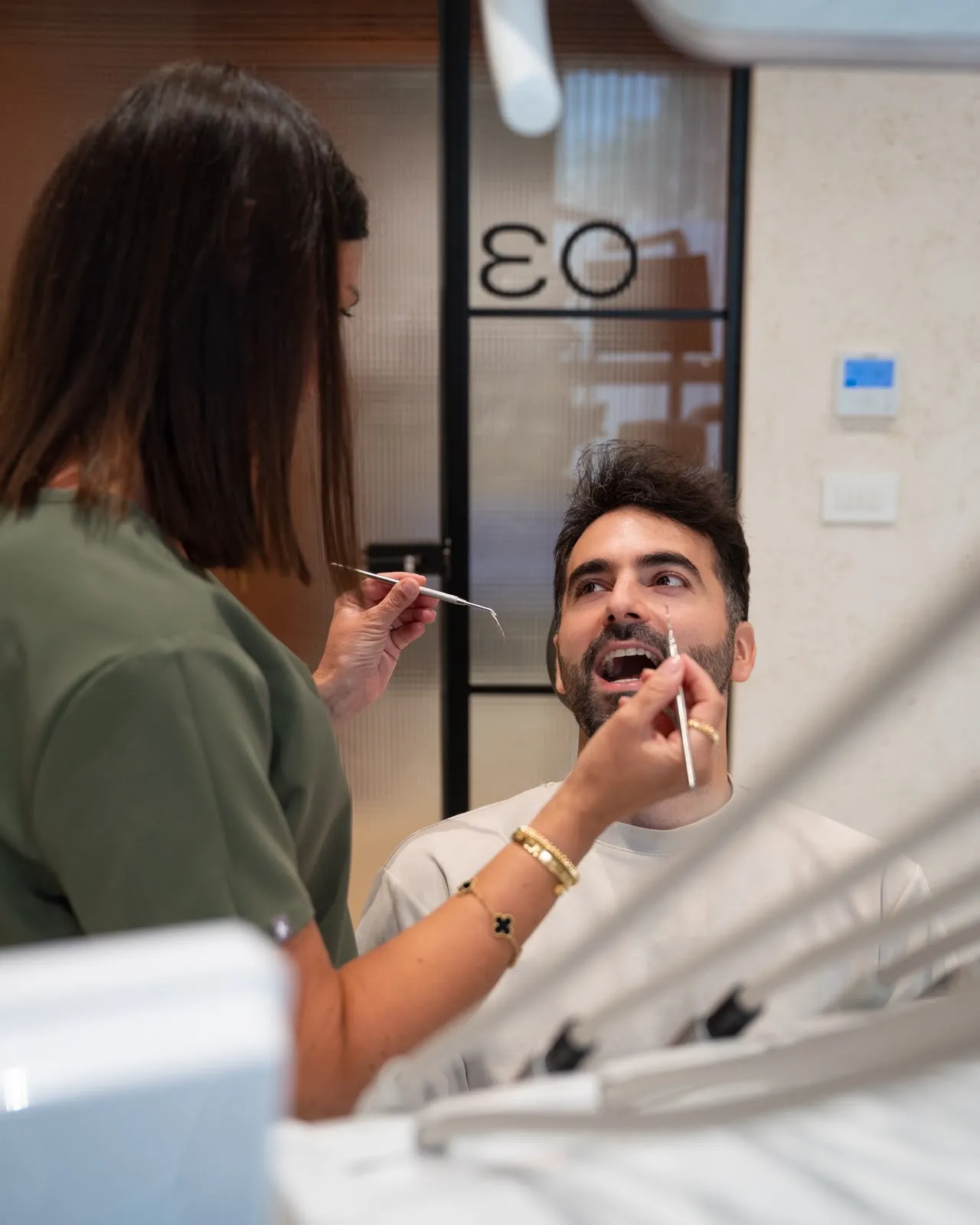
A dentist examining a patient in a DC360 treatment room
CANDIDATES

Is an aesthetic filling the right solution for you?

An aesthetic filling can be appropriate when it is necessary to restore a small or medium-sized part of a tooth while preserving as much healthy tooth tissue as possible.

The exact solution depends on the position of the tooth, the extent of the damage, and the forces to which the tooth is exposed. Therefore, the suitability of the filling is always evaluated during an examination.

Esthetic fillings can be an option if:
  • You have a cavity that needs to be removed and the missing part of the tooth restored.
  • you have an old or damaged filling that needs to be replaced
  • you notice a small crack or chipped edge of a tooth
  • you want to replace the visible dark filling with a more aesthetically acceptable solution
  • you have a worn or misshapen tooth part
  • you want to close a minor gap or correct the shape of an individual tooth, when clinically justified

A dental restoration that adapts to its natural appearance

Esthetic fillings, often known as white fillings, are made of a composite material that can be color-matched to the natural shade of the tooth. They are used after caries removal, as well as for restoring minor damage, cracks, or worn parts of the tooth.

Composite is a material applied in layers, shaped according to the tooth anatomy, and then cured with a special light. The goal is not just to close the damage, but to restore the correct shape, contact with adjacent teeth, and bite function.

When creating fillings, we strive to preserve as much healthy tooth tissue as possible and achieve a result that blends harmoniously with the rest of the tooth.
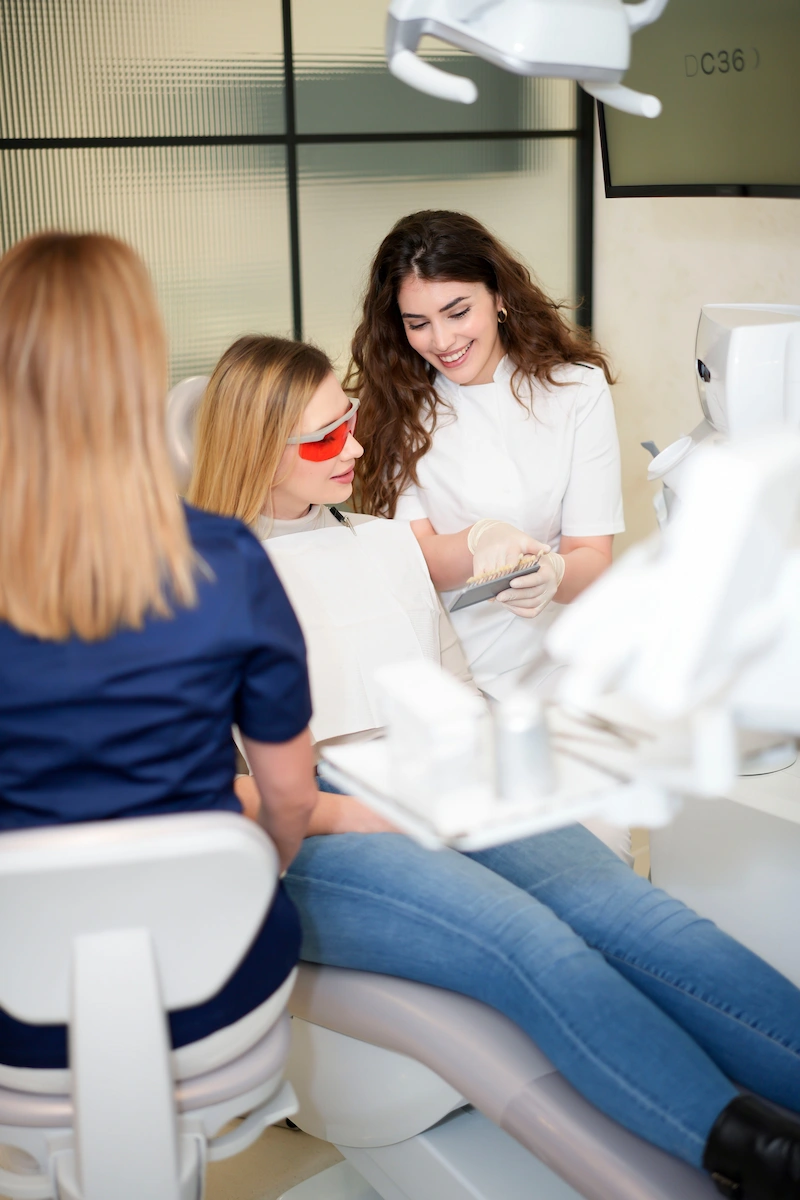
In-practice teeth whitening with protective eyewear
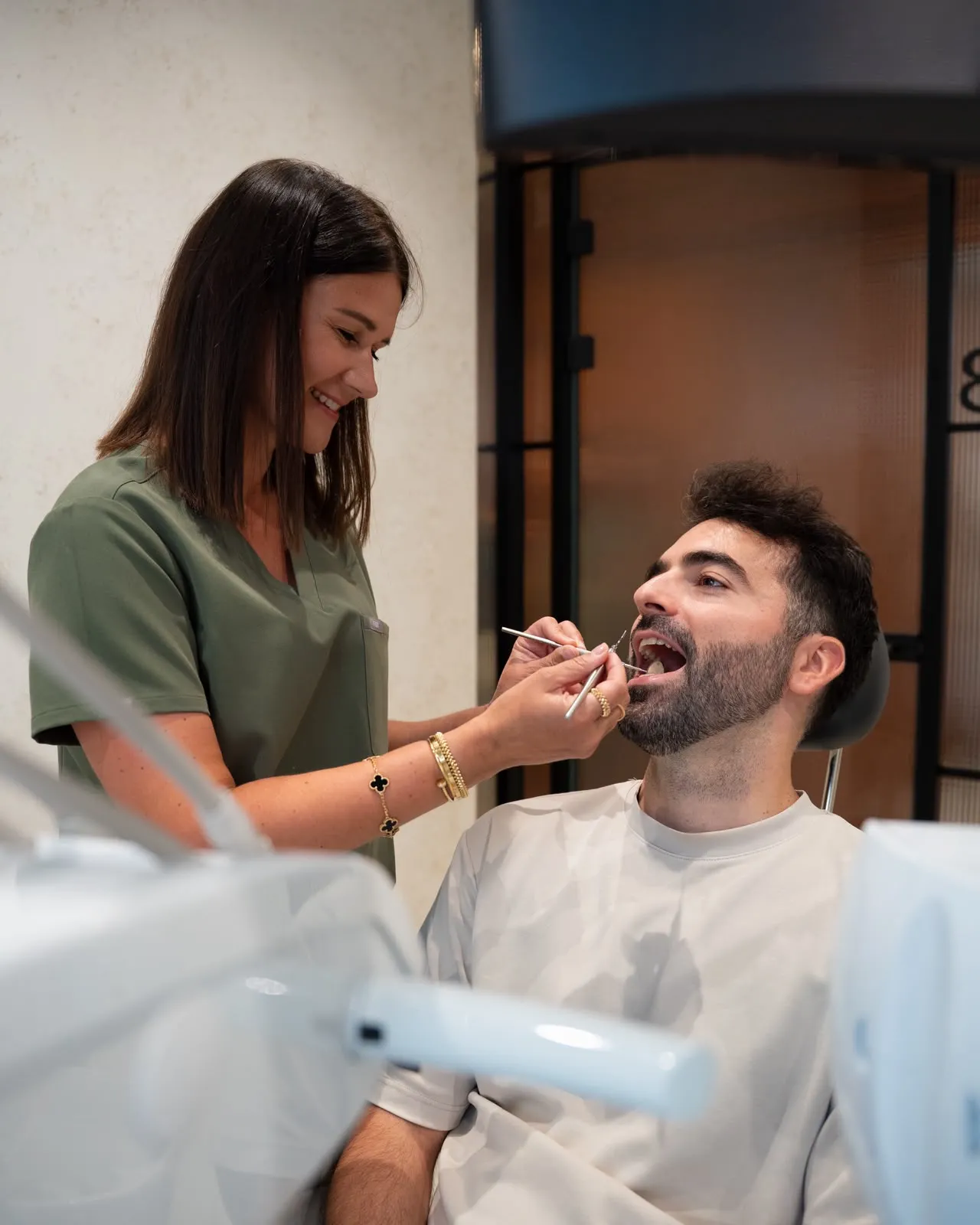
A dentist examining a patient's teeth

Aesthetic filling or dental crown?

A composite filling is most commonly used when there is enough healthy tooth tissue remaining to support the restored part of the tooth. The greater the damage, the more important it is to assess whether the filling can withstand chewing forces in the long term.

If a large part of the tooth is lost, if the walls are extremely thin, or if the tooth has been previously endodontically treated, a crown, inlay, or onlay can provide greater stability. The decision is made not only based on the size of the visible damage, but also according to the position of the tooth, the bite, and the condition of the surrounding tissue.

The goal is to choose the least invasive solution that can simultaneously protect the tooth and restore its reliable function.
DC360 PROCESS

From the examination to the final bite check

01

Review and shade selection

We are examining the tooth and determining the shade that naturally fits.
02

Removal of damaged tissue

Tooth decay or damaged fillings are carefully removed while preserving the healthy part of the tooth.
03

Placement of fillings

The composite material is applied in layers for structural restoration.
04

Shaping and polishing

The filling is shaped and polished for a smooth surface.
05

Bite check

We are checking the contact with the adjacent teeth and adjusting the height.
Advantages

The standard we set

Individual approach

We create every therapy plan according to your condition, needs, and expectations, without universal solutions.

Careful planning

We base implant therapy on diagnostics, analysis, and a clear explanation of all steps.

Natural aesthetic result

We design the prosthetic restoration so that it harmoniously blends into your smile, bite, and facial features.

The team leading you

A team of experts guides you through the process, from the initial examination to the final check and maintenance of the results.
PRICE

Cost of aesthetic filling

The price depends on the size of the damage, the number of tooth surfaces that need to be restored, and the complexity of the procedure.
After the examination, you will receive a clear treatment plan and information on the expected costs.
Get to know us

A team dedicated to every smile

Dr. Marta Šeparović, founder and director of DC360
Marta Šeparović
founder and director
Ana Lucija Perković, doctor of dental medicine at DC360
Ana Lucija Perković
Doctor of Dental Medicine
Ivana Jukić, doctor of dental medicine at DC360
Ivana Jukić
Doctor of Dental Medicine
Lea Živoder, member of the DC360 team
Ivana Župić
Dental assistant
FAQ

Frequently asked questions

Is there anything else you are interested in? Contact us and we will get back to you shortly.

These are different names for a similar type of restoration. The term white filling is commonly used for a composite filling whose color is adjusted to the natural shade of the tooth.

Simpler fillings can often be made in a single visit. The duration of the procedure depends on the size of the damage, the position of the tooth, and the complexity of the shaping.

The procedure is performed under local anesthesia as needed. During the procedure, you may feel pressure or vibrations, but the goal is to keep discomfort to a minimum. Post-procedure sensitivity may be temporarily present in some patients.

Durability depends on the size of the filling, tooth position, bite forces, oral hygiene, and patient habits. Regular check-ups help timely detect wear or changes at the edges of the fillings.

Smaller gaps can in certain cases be corrected with composite bonding. Before the procedure, it is necessary to evaluate the tooth position, bite, and smile proportions to ensure the change is functionally and aesthetically acceptable.

Not always. If a larger part of the tooth is lost or the remaining structure is weakened, an inlay, onlay, or crown can provide more stable protection. The most suitable solution is assessed based on a clinical examination and diagnostics.
Explore more

Related services

Aesthetic crowns

Crowns that protect a weakened tooth and restore its natural appearance and full function.

Veneers

Thin ceramic shells that cover the front surface of the teeth and change the shape or color of the smile.

Dental implants

Dental implant installation as a permanent replacement for a missing tooth, with a natural feel and function.

A DC360 team member on the phone beside the clinic's branded counter
Contact

Restore function, safety and a natural smile

Send an enquiry and we will get back to you within 24 hours.

"*" indicates required fields

This field is for validation purposes and should be left unchanged.
Full name*
Max. file size: 8 MB.
NEWSLETTER

Tips and news from the clinic

Useful tips, answers to frequently asked questions, and news from the clinic, straight to your inbox.