DC360 — Dental Clinic 360 logo
DC360 — dental clinic logo

Dental fillings

Tooth restoration after decay or minor damage, with the goal of preserving as much healthy tooth tissue as possible and restoring its natural function.
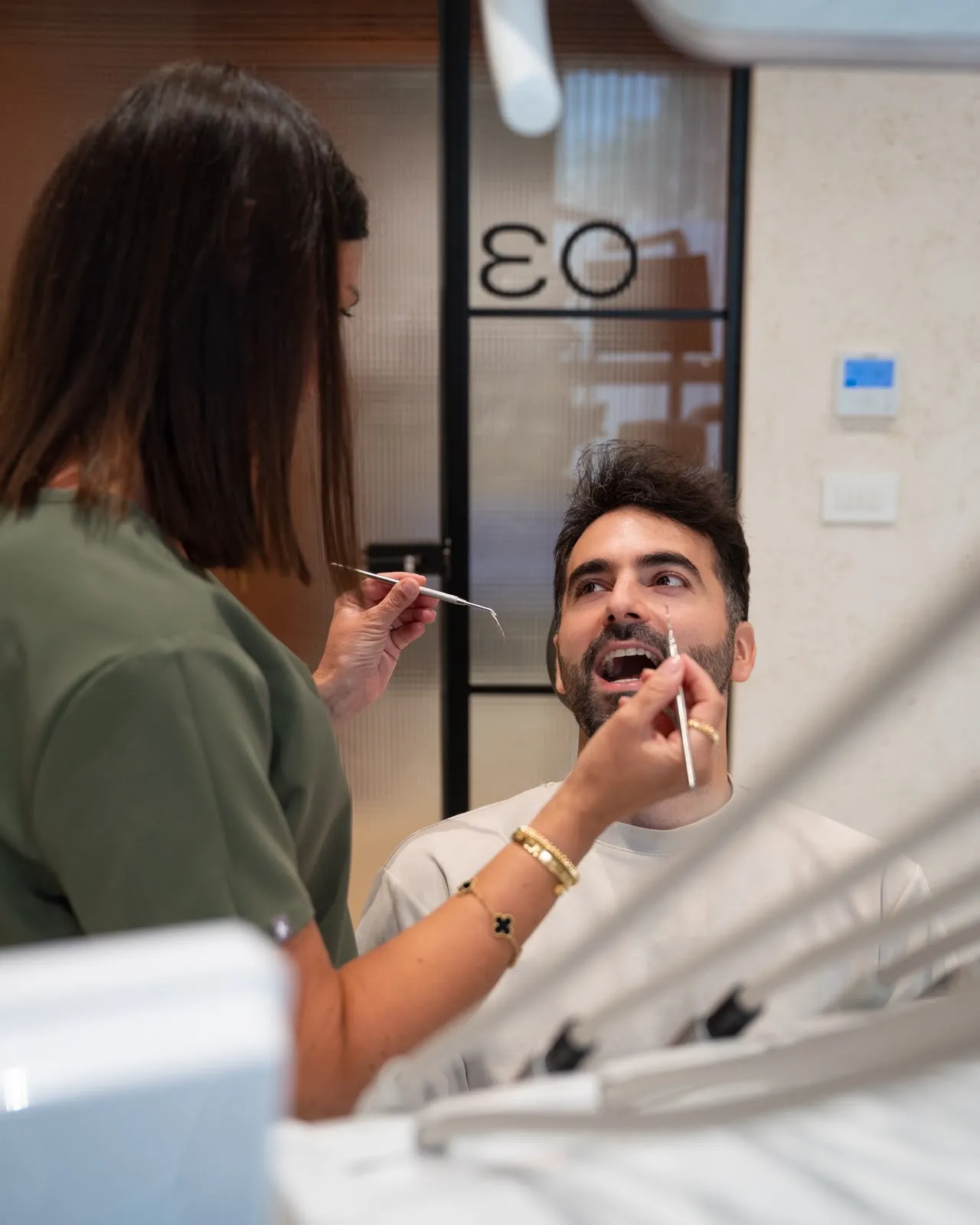
A dentist examining a patient in a DC360 treatment room
CANDIDATES

When is a dental filling needed?

A dental filling is most commonly used when a part of the tooth is damaged by decay, wear, or minor trauma, but there is still enough healthy structure left for a direct restoration.

A fill may be suitable if:
  • You have a cavity that needs to be removed
  • The existing filling is damaged, worn out, or no longer fits properly.
  • A small part of the tooth broke off
  • The tooth is locally worn down
  • it is necessary to restore its natural shape
  • There is enough healthy tissue for a stable reconstruction.

What is a dental filling?

After removing the caries or damaged part of the tooth, the resulting space is restored with a material that re-establishes its shape and function.

Composite fillings can be matched to the natural tooth shade, which is why they are often referred to in everyday speech as white fillings.

The goal is not only to close the damage, but to shape the tooth surface so that it properly participates in mastication and contact with adjacent teeth.
The DC360 dental clinic team
A dentist talking with a patient in a DC360 treatment room

When is a traditional filling no longer sufficient?

The size of the filling is important for tooth stability. If a large part of its structure is lost, the remaining walls may be too weak for a conventional composite filling.

In such situations, a ceramic inlay, onlay, or overlay can be considered, and for even more extensive damage, a dental crown.

During the examination, we assess how much healthy tissue remains and which solution provides the best balance between tooth preservation and required stability.
DC360 PROCESS

What does the procedure look like?

01

Dental check-up

We are assessing the size and depth of the damage and, if necessary, performing additional diagnostics.
02

Removal of damaged tissue

Caries or an old inadequate filling is removed while preserving the healthy part of the tooth.
03

Tooth preparation

The area is being prepared for the placement of a new filling.
04

Filling placement

The material is applied and shaped according to the natural anatomy of the tooth.
05

Finishing

The filling is polished and adjusted to the surrounding surfaces.
06

Bite check

We are checking the contacts so that the filling does not create unnecessary load during chewing.
Advantages

The standard we set

Individual approach

We create every therapy plan according to your condition, needs, and expectations, without universal solutions.

Careful planning

We base implant therapy on diagnostics, analysis, and a clear explanation of all steps.

Natural aesthetic result

We design the prosthetic restoration so that it harmoniously blends into your smile, bite, and facial features.

The team leading you

A team of experts guides you through the process, from the initial examination to the final check and maintenance of the results.
PRICE

What affects the price of a dental filling?

The price depends on the size of the damage, the number of tooth surfaces that need to be restored, and the complexity of the procedure.
After the examination, we will explain to you which solution is needed and what the therapy includes.
Get to know us

A team dedicated to every smile

Dr. Marta Šeparović, founder and director of DC360
Marta Šeparović
founder and director
Ana Lucija Perković, doctor of dental medicine at DC360
Ana Lucija Perković
Doctor of Dental Medicine
Ivana Jukić, doctor of dental medicine at DC360
Ivana Jukić
Doctor of Dental Medicine
Lea Živoder, member of the DC360 team
Ivana Župić
Dental assistant
FAQ

Frequently asked questions

Is there anything else you are interested in? Contact us and we will get back to you shortly.

Yes. „Plomba“ is the common name for a dental filling used to replace a part of the tooth lost due to caries or other damage.

Local anesthesia is used as needed. Transient sensitivity may occur after the procedure, especially with deeper fillings.

Simpler fillings can usually be done during a single visit. The duration depends on the size and location of the damage.

Durability depends on the size of the filling, the position of the tooth, the bite, oral hygiene, and individual habits.

Replacement may be recommended if the filling is cracked, worn, detached from the tooth, or if new decay has developed at its margin.

Agreed. Decay can appear at the transition between the filling and the natural tooth, which is why regular check-ups are important.

It may be more suitable for larger damages when a classic composite filling no longer provides sufficient stability, and a full crown is not yet necessary.

Not every initial lesion needs to require a filling. Depending on the stage of the caries, location, and patient risk, certain lesions can be monitored or treated preventively.
Explore more

Related services

Root canal retreatment

A stable, safe, and long-term solution for tooth replacement, with a treatment plan tailored to your smile.

Aesthetic crowns

Crowns that protect a weakened tooth and restore its natural appearance and full function.

Ceramic fillings (Inlay, Onlay, Overlay)

Ceramic fillings for larger tooth damages that a classic filling cannot permanently resolve.

A DC360 team member on the phone beside the clinic's branded counter
Contact

Restore function, safety and a natural smile

Send an enquiry and we will get back to you within 24 hours.

"*" indicates required fields

This field is for validation purposes and should be left unchanged.
Full name*
Max. file size: 8 MB.
NEWSLETTER

Tips and news from the clinic

Useful tips, answers to frequently asked questions, and news from the clinic, straight to your inbox.