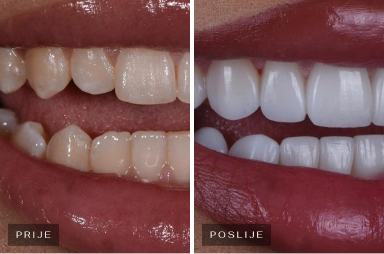
Every millimeter of a natural tooth is worth saving
In restorative and endodontic therapy, our primary goal is to assess how much healthy tooth structure we can preserve.
We do not just treat visible damage. We look for its cause, assess the condition of the entire tooth, and choose the therapy that will give it the best chance for long-term function. When possible, we choose a more conservative approach and avoid unnecessary removal of healthy tissue.
Tooth decay often manifests as pain or discomfort, sensitivity to cold, heat, or sweets, and visible spots or cavities on the tooth. It often develops without symptoms as well, so regular check-ups are the best way for early detection.
A filling is suitable for minor and medium-sized damage where enough healthy tissue is preserved. If a large part of the tooth is lost or the remaining walls are weakened, a crown is a more stable solution that provides long-term tooth protection.
Composite fillings („white fillings“) are applied directly to the tooth and are suitable for minor damage. Ceramic fillings (inlay, onlay, overlay) are custom-made, provide greater strength and durability, and are ideal for larger damage.
Treatment is necessary when the dental pulp (nerve) is irreversibly inflamed or infected due to deep caries, trauma, or other damage.
The procedure is performed under local anesthesia, so pain is controlled during the treatment. After the procedure, transient sensitivity is possible, which is easily managed.
Transient sensitivity is possible after treatment. If the pain increases or swelling occurs, it is necessary to contact a doctor to determine the condition of the tooth and the potential need for additional treatment.
Durability depends on the quality of the treatment and the final restoration, the amount of remaining tooth tissue, the bite, and regular oral hygiene. With proper maintenance, a treated tooth can last for many years.